

 By
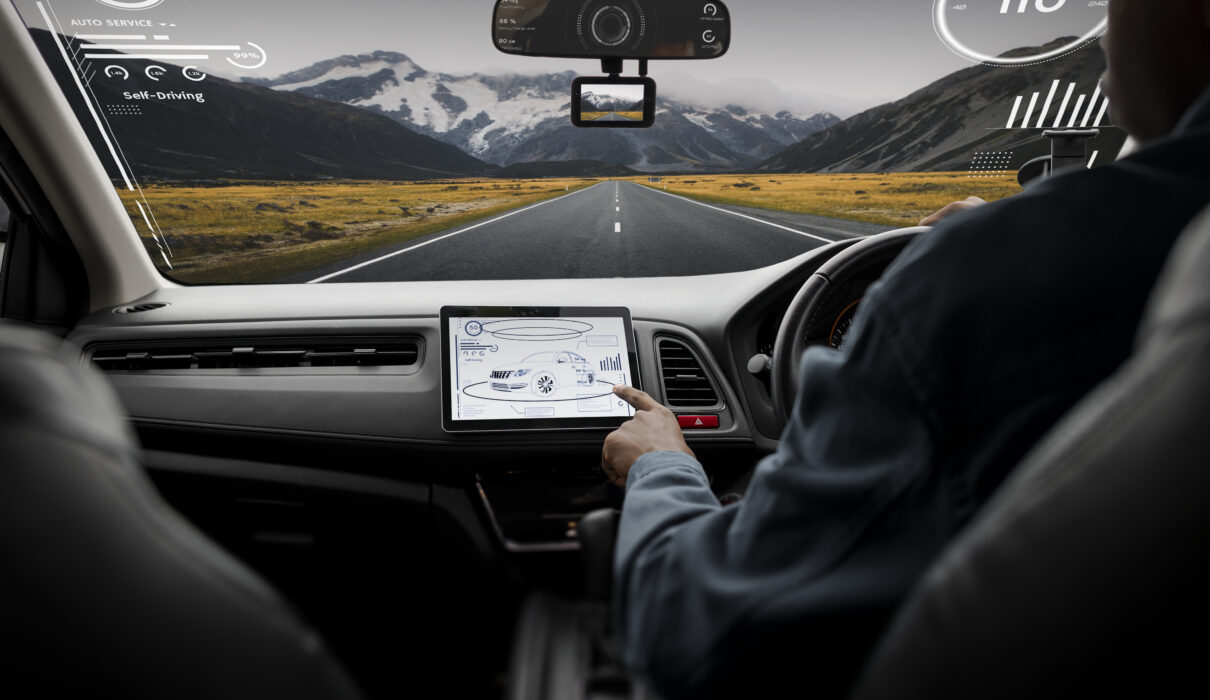
By In the high-tech corridors of 2026, the USA is witnessing a profound shift in cabin design: the extinction of the traditional physical screen. For decades, the American dashboard was defined by the “Screen Race,” with displays growing larger and more intrusive. However, as of 2026, the trend has reversed. Holographic and Augmented Reality (AR) interfaces are now the gold standard, turning the entire interior of the vehicle into a fluid, digital canvas while effectively “decluttering” the driver’s physical space.
To Know More:- San Francisco EV Scene in 2026
The End of the “Look-Down” Era
The primary driver for the holographic boom in the USA is a radical commitment to safety and cognitive ergonomics. In 2026, the National Highway Traffic Safety Administration (NHTSA) has increasingly favored technologies that keep the driver’s eyes strictly on the horizon.
- Focal-Point Harmony: Traditional screens require the eye to refocus from the road (infinity) to a display just inches away. Holographic interfaces project data into a virtual “depth,” aligning the information with the road ahead. This eliminates the split-second “accommodation time” needed to refocus, significantly reducing driver fatigue on long American interstate hauls.
- The Death of Fingerprints: Physical touchscreens are notorious for attracting smudges that obscure visibility in the bright American sun. Holographic systems utilize gesture-based controls and mid-air haptic feedback, allowing drivers to “swipe” through music or “tap” a navigation prompt in the air without ever touching a surface.
- Spatial Navigation: Rather than a 2D map on a center console, 2026 holographic systems project “Glow-Path” arrows directly onto the asphalt as seen through the windshield. This AR overlay makes navigating complex interchanges in cities like Los Angeles or Chicago as intuitive as following a physical line on the road.
Redefining the “Soft-Luxury” Interior
Beyond safety, the shift to holography is driven by a new American aesthetic: Digital Minimalism. In 2026, luxury is no longer defined by how many screens you have, but by the absence of them.
- Stealth Technology: When the vehicle is powered down, the interior of a 2026 luxury SUV looks like a high-end living room—clean leather, open-pore wood, and no black glass slabs. The technology only “appears” when needed, manifesting as crisp, high-definition light floating in the cabin.
- The Passenger’s Private Cinema: Holographic tech allows for “Directional Viewing.” In 2026, a passenger can watch a movie projected into their own field of vision, while the driver sees only the essential road data. This “Visual Privacy” eliminates the distraction of moving images for the person behind the wheel.
- Holographic Assistants: The standard voice assistant has evolved into a 3D avatar. Whether it’s a helpful concierge or a digital co-pilot, these floating holographic entities provide a sense of “Human-Machine Partnership” that a flat screen simply cannot replicate, making long solo drives across the USA feel more connected.
The Infrastructure of Light
The hardware supporting this shift has become remarkably compact by 2026. The bulky projectors of the early 2020s have been replaced by “In-Plane” holographic films embedded directly into the glass.
- Nanoparticle Windshields: American glass manufacturers are now laminating windshields with light-sensitive nanoparticles. These particles can “catch” laser or LED projections to create ultra-bright, 12,000-nit displays that remain perfectly visible even in the blinding light of the Arizona desert.
- Context-Aware Dimming: By 2026, holographic interfaces are linked to eye-tracking cameras. The system knows exactly where the driver is looking and dims or moves information to ensure it never obstructs a potential hazard, such as a pedestrian or a merging vehicle.
- Bespoke Digital Environments: In the USA, where personalization is key, holographic cabins allow users to change their entire “Interior Theme” instantly. A driver can switch from a “Minimalist Zen” mode to a “High-Tech Command Center” layout with a single voice command, rearranging every piece of digital information in the 3D space.
Why the USA is Leading the Adoption
The USA has become the primary market for this technology due to the sheer scale of its driving culture and the influence of Silicon Valley’s “Spatial Computing” boom.
- The Commuter Culture: With Americans spending an average of 300 hours a year in their cars, the demand for an interface that feels “natural” and “non-taxing” is higher than anywhere else in the world.
- The 5G-V2X Synergy: In 2026, the rollout of nationwide 5G has allowed these holographic systems to pull real-time data from the city infrastructure. A red light in San Francisco can project a holographic “stop” countdown directly onto the driver’s field of vision, synchronized with the city’s traffic management grid.
- The “Cool Factor”: There is no denying the cultural impact. In the American market, the holographic dashboard has become the ultimate status symbol of 2026, signaling that the owner is at the absolute cutting edge of the “Software-Defined Vehicle” revolution.
To Know More:- How autonomous freight corridors are transforming US highways